
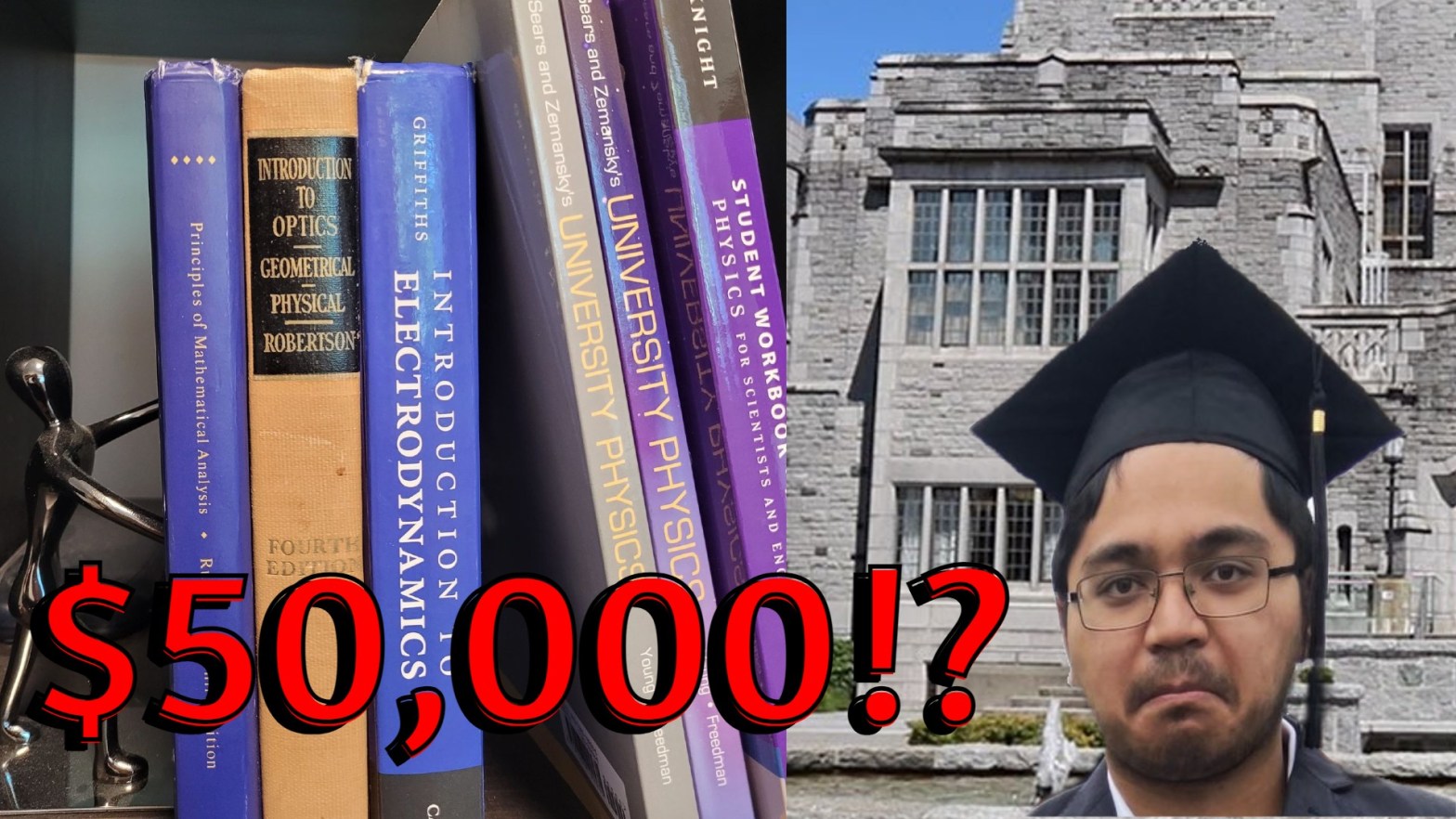
I just finished a degree that took SIX YEARS.
High school isn’t even six years! And it wasn’t smooth sailing either, at times I had to take up to seven courses in a term. But I’m finally finished and upon reflection there’s just one question to answer: was it all worth it? To answer this, I first need to explain what exactly this degree entailed to get an idea of the cost of it all.
What is Engineering Physics?
The best definition that I have found for this program is the following:
[Engineering Physics] is where theory meets practice… you can gain the skills to think about very complex problems and then build the solutions.
– Engineering Physics Director, probably
Essentially, if you consider the pinnacle of science to be research in a lab coming up with theories (ala Einstein or Schrodinger), and the pinnacle of engineering to be designing megaprojects (think of the space station), then engineering physics is the bridge between the two.
Although the definition that I think works just fine is “physics engineering” (which is how my parents still refer to it) – because essentially you are just engineering with physics in mind.
But what does that mean! What do you actually learn?
You learn a bit of everything! Here were the courses that I was required to take to finish my degree (this changes over time so since I started in 2016 this list is a bit outdated).
2nd Year
- Principles of Software Construction (CPEN 221)
- Linear Circuits (ELEC 204)
- Introduction to Instrument Design (ENPH 253)
- Heat and Thermodynamics (ENPH 257)
- Experimental Techniques (ENPH 259)
- Mechanics II (ENPH 270)
- Multivariable and Vector Calculus (MATH 217)
- Ordinary Differential Equations (MATH 255)
- Intro to Mechanics of Materials (MECH 260)
- Intro to Modern Physics (PHYS 250)
- Partial Differential Equations (MATH 257)
3rd/4th Year
- Digital Systems and Microcomputers (CPEN 312)
- Signals and Systems (ELEC 221)
- Applied Complex Analysis (MATH 305)
- Applied Linear Algebra (MATH 307)
- Introduction to Fluid Mechanics (MECH 280)
- Mechanical Design 1 (MECH 325)
- Mechanics of Materials (MECH 360)
- Electricity and Magnetism (PHYS 301)
- Introduction to Quantum Mechanics (PHYS 304)
- Applications to Classical Mechanics (PHYS 350)
- Probability and Physics Applications (MATH 318)
- Engineering Materials (APSC 278)
4th/5th Year
- Systems and Control (ELEC 341)
- Applied Partial and Differential Equations (MATH 400)
- Electromagnetic Theory (PHYS 401)
- Professional Engineering Practice (APSC 450)
- Laboratory Techniques in Physics (ENPH 352)
- Statistical Mechanics (PHYS 403)
- Optics (PHYS 408)
- Electronic Circuits (ELEC 301)
- Economic Analysis of Engineering Projects (ELEC 481)
- Computational Physics (PHYS 410)
- Engineering Physics Project 1&2 (ENPH 459/479)
One thing to note is that all (well, most) of these courses are required for the degree and you take around 5 more courses in any specialty that you so desire. The electives that I took were:
- General Relativity (PHYS 407)
- Semiconductor Devices: Physics, Design and Analysis (ELEC 415)
- Electronic Materials (MTRL 478)
- Applied Solid State Physics (PHYS 474)
- Applied Nuclear Physics (PHYS 473)
- Real Variables 1 (MATH 320)
Which turned out to be a lot more physics-heavy than I anticipated.
Looking back now though, it also seems as though the required courses are also VERY physics heavy. There are only a handful of engineering courses sprinkled throughout – by my count three mechanical engineering courses (MECH), ~four electrical engineering courses (ELEC), and just a single computer engineering course (CPEN). (As a disclaimer, some of the ELEC courses were options between an alternate course in a different specialization but I always sprung for the ELEC option).
But this makes a lot of sense, we get just enough of a taste of every engineering discipline so that we can choose a specialization using our electives. In my case I leaned very heavily towards advanced physics but many people have leaned toward computer science, mech, or elec. This has been shown to be both good and bad.
PROS
- Exposure to many different fields for wide breadth of knowledge
- Flexibility to change paths partway through if you discover “your calling”
- Ability to become a “jack of all trades” and collect skills as you progress
- Lots of courses to choose from (literally anything tbh)
CONS
- Not enough time to heavily specialize in your area of interest leading to apathy towards ‘unrelated’ courses
- Perpetual indecision on what to study because all your friends’ courses sound more interesting than yours
- Growing feeling of inadequacy because you are always “just decent” at things whereas these specialized majors are cracked no cap.
- Too many courses to choose from (ahhh!)
Now, all of these cons don’t apply to me specifically (except for the perpetual indecision ;)) but they are all things that I have heard from my friends in the program.
All this aside, I think overall the program structure was a positive for me, I enjoyed learning all sorts of things and I think I could find use in all the skills that I learned. However, the most important skill that I gained is the ability to learn. Whether it is a new programming language, software interface for some form of design, or complex physics principles, I can pick up new skills very easily – simply because I had to do this for SIX YEARS! Becoming an expert definitely takes many many hours, but give me two hours and six hotkeys and I can sure as hell fake it til I make it.
the most important skill that I gained is the ability to learn.
– Someone awesome B)
But what was the cost?!
So we answered the question of what the program is, the classes I took, and the overall structure, but what is the cost of everything? How can we justify if it was “worth it” if we don’t know the cost?!?!?
Okay okay, this is definitely a very important factor so I want to be very transparent here. I can see cost in two ways: time and money. Time is a huge factor which I brought up at the very start of this post, but let me break down that time in detail.
SIX YEARS TOTAL = 72 MONTHS
- 20 MONTHS OF CO-OP (Working at internships)
- 8 MONTHS OFF (freedom :))
- 44 MONTHS OF CLASSES
So this turns out to be less than 4 years of classes! The breakdown is not that bad and in fact, if you were to finish the degree in five years (which many do) then the breakdown would be 16/4/40 or something like that. I happened to take an extra term of co-op and less classes when school went online so I extended by a year.
44 months of classes is quite the time span but I wasn’t stuck to just school, co-op allowed me to develop a professional career and even land some part-time jobs which helped me grow even further. It is definitely possible to juggle extracurriculars on top of school – I held 2 part-time positions, a TA position, and a design team leadership position on top of 5 courses and still managed to play enough Pokémon tournaments to qualify for Worlds that year.
And now for the financial cost:
In my most recent semester (W2021 JAN) the cost of a three-credit course was $600, of which I took 5, resulting in around $3k for a semester’s tuition. Adding in a the $170 UPass (which gives unlimited Transit passes in the lower mainland for the whole semester) my tuition bill was ~$3,200 in my final term of school. This is about the average over my whole degree, I’ll post the rest of the numbers below (rounded to the nearest 100)
- 2021W
- 2021S
- 2020W
- 2020S
- 2019W
- 2019S
- 2018W
- 2018S
- 2017W
- 2016W
- $7,000 (full course load)
- $100 (Just a Upass lol)
- $4,600 (one term + co-op fees)
- $1,400 (just one class + co-op fees)
- $5,900 (one term + co-op fees)
- $700 (co-op fees)
- $9,000 (full load, 7/8 per term)
- $3,000 (full load, summer is short)
- $5,900 (full load)
- $7,200 (full load)
This leads to a grand total of $45,000
This is a significant amount to spend. Now, I was lucky enough to be a domestic student which is one of the reasons that my tuition was kept so low, international students to the university regularly paid $45k for just one year, not even six. I don’t have any specific numbers that I can share, but I do know that the prices are quite high.
I was also lucky enough to not have to take out any student loans, I have had a bit of money saved up from various Pokémon scholarships and my savings that my parents kept for my college education. This put me in a very fortunate position so that the cost wasn’t a huge factor throughout my degree.
In summary the cost was about 44 months of classes and $45,000 dollars spent (~$1000/month) or if you were to include co-op terms since there are some associated fees, the cost is 64 months and $45,000 (~700/month). These costs are sunk, already spent into the UBC abyss and lost forever, but the gains are quite promising.
So what was gained?
There are arguments to be made for a lot of different potential gains. First, I will attempt to list every tangible gain throughout my six years at UBC.
- One degree certificate (good for wall decor)
- One “iron” ring (good for finger decor)
- Three co-op jobs (experience)
- Seven terms with a Teaching Assistant job
- Two part-time jobs
- knowledge
- friendship
I can only put a monetary value on some of these (namely the ones with “job” in them), and while I don’t want to leak how much each job paid me, I can leak that the amount I made in all of my work experience is greater than the amount that I have paid in tuition. Also, while the two part-time jobs I have gotten are technically outside of the school system, they are positions which have either evolved out of a co-op position or from a school capstone project so I will count them.
This alone makes us break even financially, but there is still the other benefits to consider.
KNOWLEDGE
How much is knowledge worth? Is it priceless? Textbook retailers seem to think so. Or is knowledge free – after all I could simply scour the internet for resources and learn the same things. Surely some knowledge is worth more than others, for instance knowing about basic design principles for any project is more useful than knowing about Einstein-Rosen bridges (unless you meet Thor I guess).

In any case, knowledge appears to be invaluable and the pursuit of knowledge is a worthwhile cause.
EXPERIENCE
Besides my paycheques from all my co-op positions, I was able to gain a lot of experience in many different fields. I’ve worked at Science World where a lot of my day was spent interacting with the public and communicating science; I’ve worked in research at one of the oldest universities in Germany and a leader in solid state physics; I’ve worked at a thriving billion-dollar company in the heart of downtown Vancouver in a prime engineering position; and I’ve worked for a startup company hoping to one day make it that far.
Thanks to the resources available through the co-op program and the faculty at UBC, I was able to explore many different fields and find what works best for me.
FRIENDSHIP
I’ll admit I’m pretty introverted so I didn’t have huge friend groups or anything, but I did make some good connections with people that I am very grateful for. The program itself is very small and everyone takes the same courses together, so there are lots of opportunities to work together and form bonds over the stress of having four assignments and three midterms all in one week.
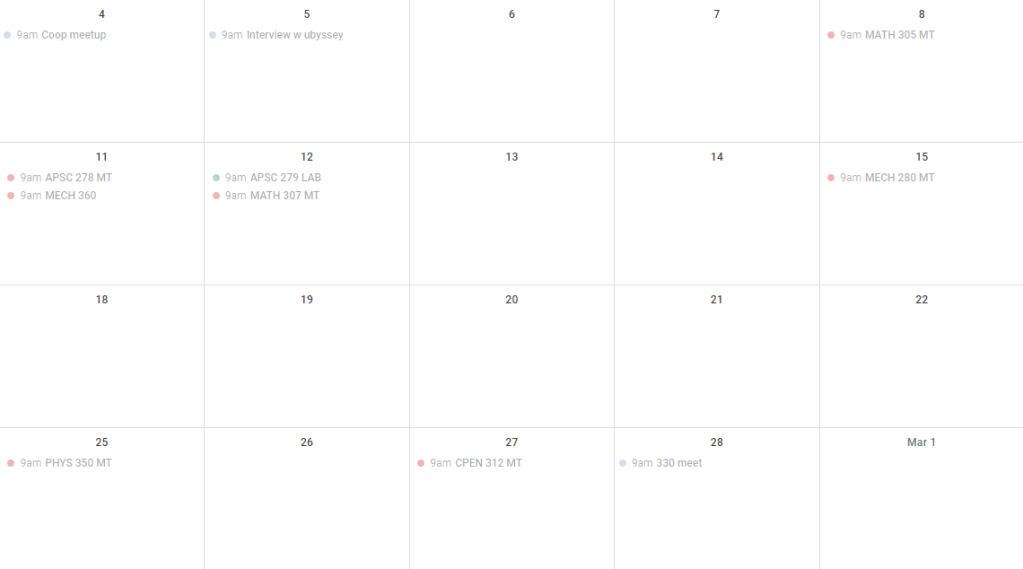
So was it all worth it?/What does this mean for you, the reader?
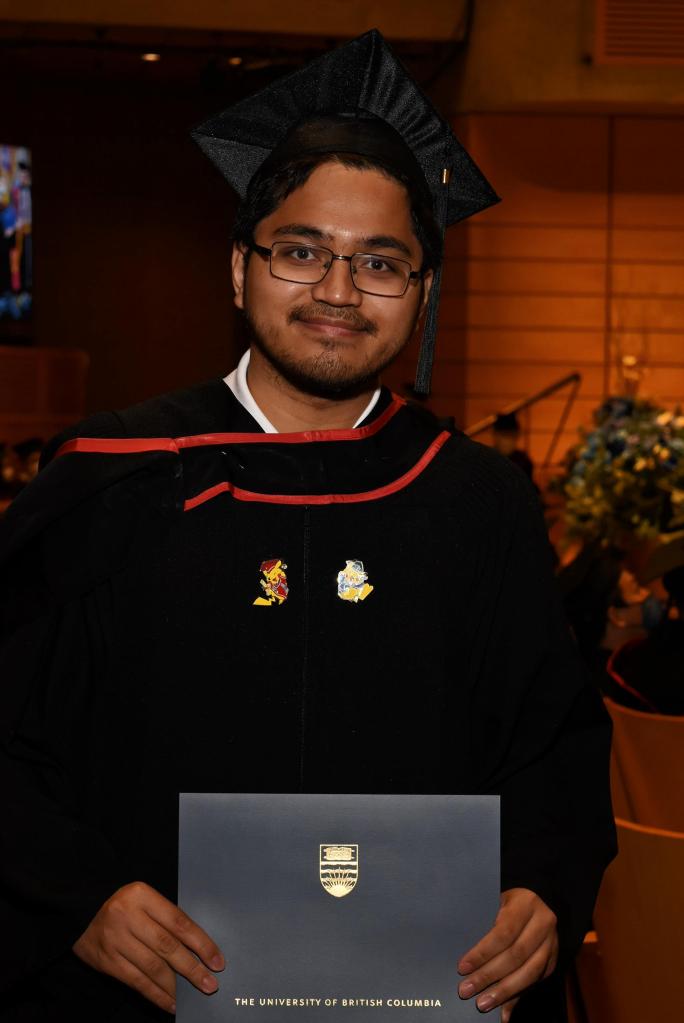
Definitely worth it! All in all I ended up with a degree that I’m proud of and that has given me the skills and opportunities to advance my career and explore my interests.
So what does this mean for you the reader? Well, if you are a student coming in to first-year engineering at UBC and aren’t sure what specialty to join, I would highly recommend Engineering Physics. If you are currently in EngPhys or are about to start soon, I wish you luck on your journey and hope that you embrace the program to its fullest and find your passion. If you happen to be a faculty or staff from the program, thanks for making it a great experience and working so hard for all of us students. If you are just on some internet deep dive and end up reading this, thanks and I hope you take away something positive from this all – whether it is the cost of education in this day and age or whether it is worth it to go to University.
Cheers,
An Engineering Physics Alumni


Interesting read. Knowledge is power. Apply it, earn the rewards it brings and ask yourself in 20 years if it was all worth it.
LikeLike