

In Vancouver, Science World is one of the local landmarks that makes up the city scape. It is the big dome in the sky that everyone points at when they ride the Skytrain from Main Street to Stadium Chinatown. It is also the hub of science communication and outreach education in British Columbia.
In my opinion, one of the best programs that Science World runs is the Robotics Club. It is a workshop that runs over six sessions where young people from 8 to 14 years of age can learn about building robots and gain some skills in prototype drawing and coding. It is the ultimate program for sating the curiosity of a new generation of engineers who are inspired by Transformers or Big Hero 6.
I worked for about a year in running these workshops as a robotics club instructor. We planned lesson plans for each day with key takeaways for each student and tried our best to present complex topics like mechanical design and coding in ways that a child could understand (and also pay attention to).
We applied different contexts to the lessons in order to garner excitement. We weren’t just building and coding robots, we were designing the next fleet of robots that could explore the moon!

We challenged students to think about what they could build to solve a real-world problem and then provide an abundance of support to help them achieve. But what is most important is building an environment in which everyone is comfortable in failing. It was the expectation that you would fail somewhere along the way – that something wouldn’t quite work out the way you expect. These are the most important moments since dealing with failure is a skill that applies to many aspects in life and not just engineering. Being able to take your failure in stride and adapt to overcome the obstacle is a skill that every young budding engineer requires.
The students work on their projects over the six sessions as we teach them about the iterative design process and how to code in Scratch (and sometimes also RobotC). They build their own robot designs using the materials in Vex kits and Lego Mindstorms.
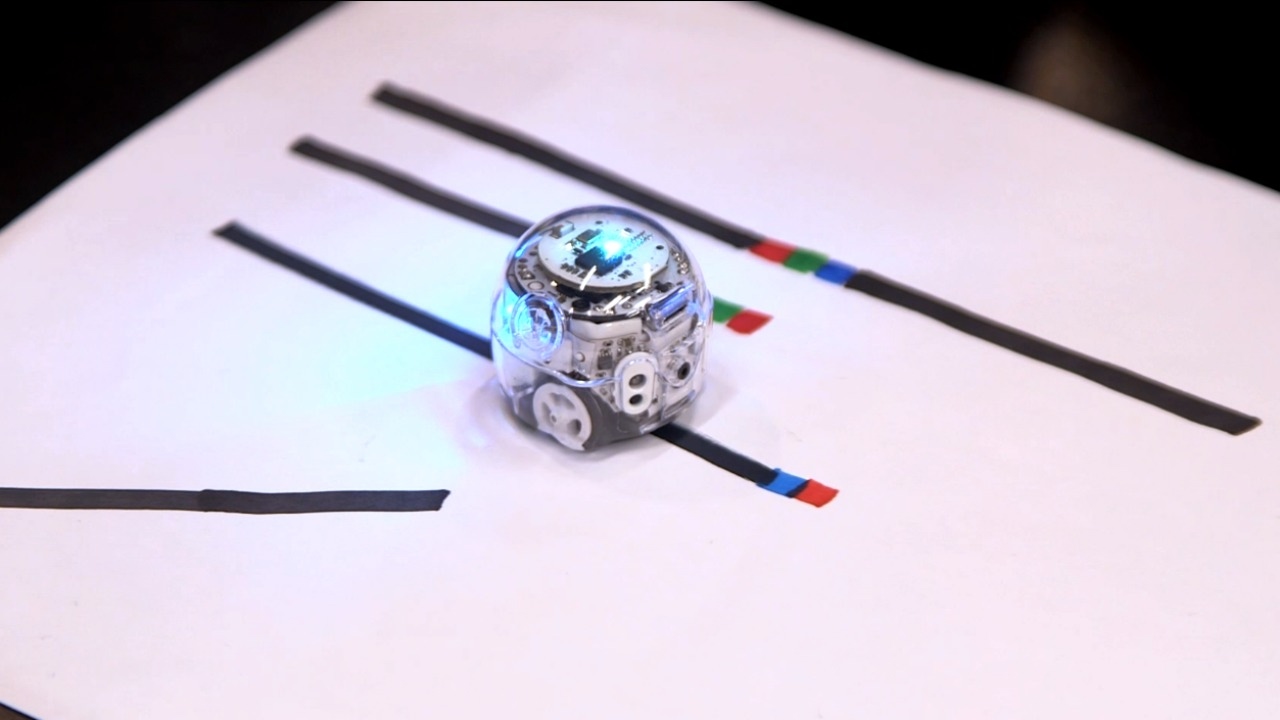
Surprisingly to me, this job was less about providing instruction and more about facilitating learning. The students never had any problem with figuring out how to build a robot once they are given the materials and the freedom to build whatever they wanted – they didn’t need any build guides or instruction manuals, we just had to help them find the missing pieces. Also, there are many more natural coders than I expected. We would show them the graphical interface of Scratch in the morning and by the end of the day some students had robots that could do basic line following.

Overall, this was a very valuable experience that has made me personally much more optimistic about the future generations of engineers. They already have such a huge head start and are able to show an understanding of the concepts that I had just learned about in University. I’ve also become more interested in teaching, it is truly one of the most important professions.
 joey gaffney